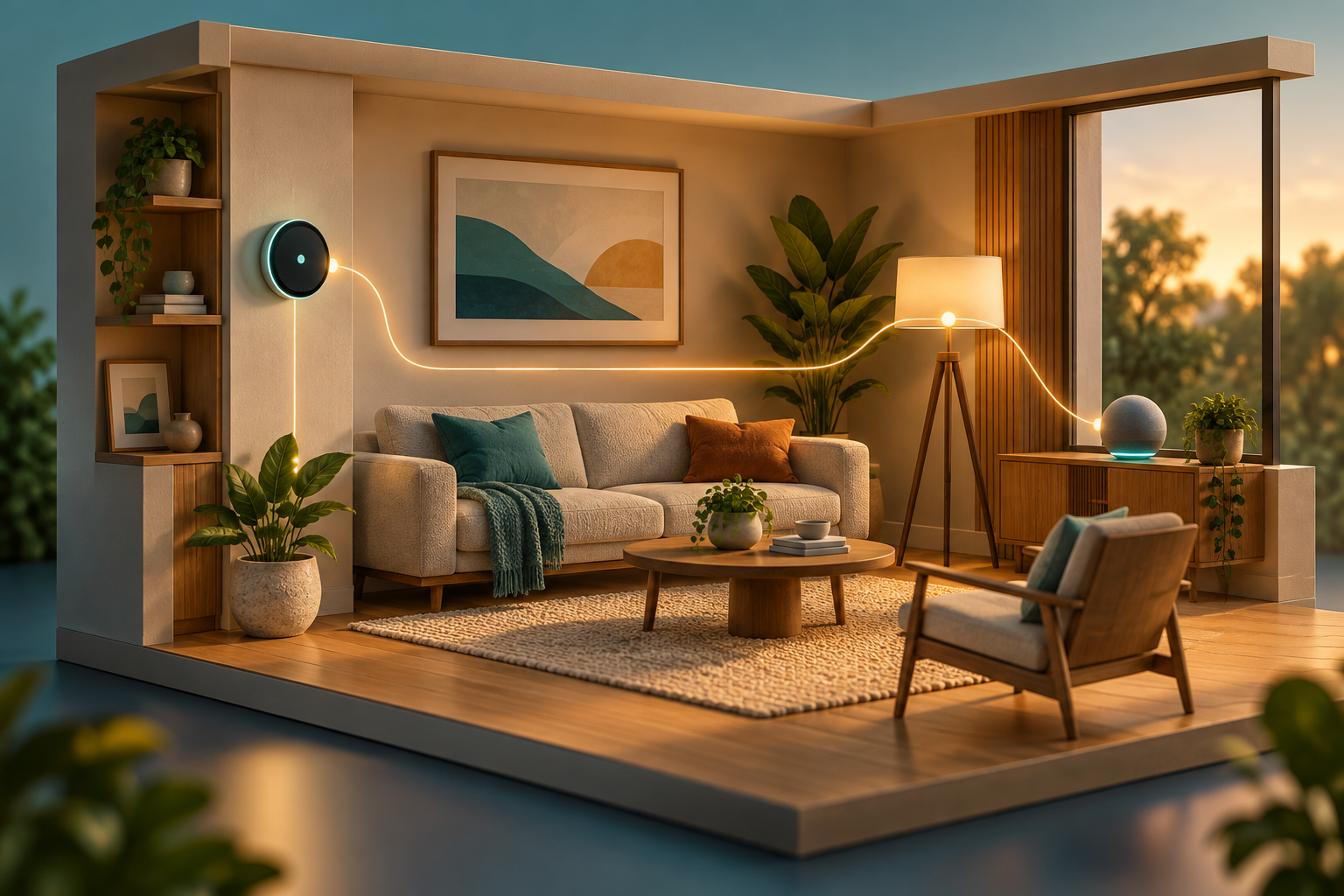
A smart home does not need an elaborate control panel or dozens of connected devices. A simple routine can be enough to demonstrate the idea: a light turns on at a chosen time, or one command adjusts several compatible devices. The useful part is the routine it supports.
Understand triggers and actions
Most basic automations follow a straightforward pattern. A trigger starts the routine, a condition decides whether it should run, and an action changes something. For example, a hypothetical evening routine might turn on a living-room lamp at sunset, but only when someone is home.
This type of rule-based automation does not necessarily use AI. AI features may interpret speech or recognize patterns, while a fixed schedule simply follows the instructions you set. Understanding the difference helps keep expectations realistic.
Keep the first routine easy to explain
Start with a routine whose behavior you can describe in one sentence. A lamp that switches off at bedtime is easier to troubleshoot than a chain of actions involving several rooms. Once the first routine behaves consistently, you can decide whether another step would help.
Think about other people who share the space. They should be able to understand what the routine does and use a normal switch or simple control when they want something different. Automation works best when it stays easy to override.
Plan for everyday interruptions
A network outage, changed schedule, or device update can affect a routine. Check which functions run locally and which depend on a remote service. Keep a practical way to control important household functions if an app or connection is unavailable.
It also helps to give devices clear names and document the few routines you use. Names such as “Living Room Lamp” are easier to remember than generic labels, especially when several people use the same system.
Measure usefulness by convenience
After trying a routine, ask whether it removes a small frustration or creates extra work. If you repeatedly override it, simplify the conditions or turn it off. A successful smart home is one that fits daily life with little attention.
Sample article created for demonstration purposes.